
From personal experience, clothing sizes in East Asia are different versus that of Western Europe and North America. The reasons are rooted in history and biology. See the On Furniture and Ethnography article.
In Mainland China, the rough scales are 165/S, 170/M, 175/L, 180/XL. The shoulder sizes roughly correspond down one size, so 170/M is size S in the States.
From going to stores in Taiwan, clothing sizing was more similar to Western sizing where Taiwan size = US size.
I have not been to SK/JP/HK, so no commentary on that.
One time I met someone from VN with a proportional jacket, so these sizings may extend into SEA.
I did not include AI research in this article, because I’ve found it to be inaccurate for existing knowledge.
Case Study 1: The Columbia Jacket
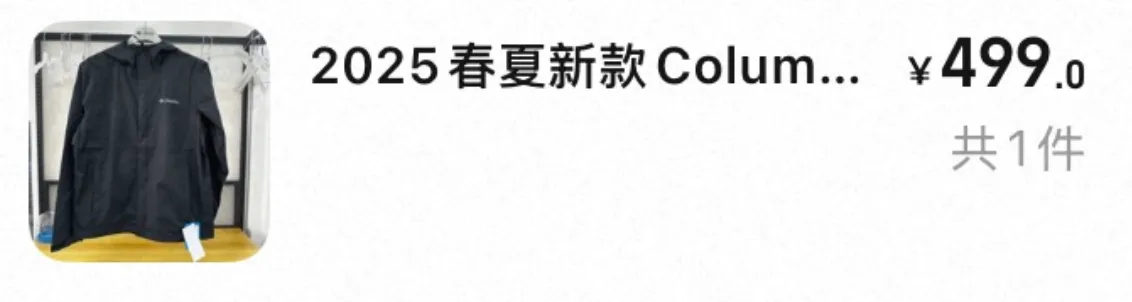
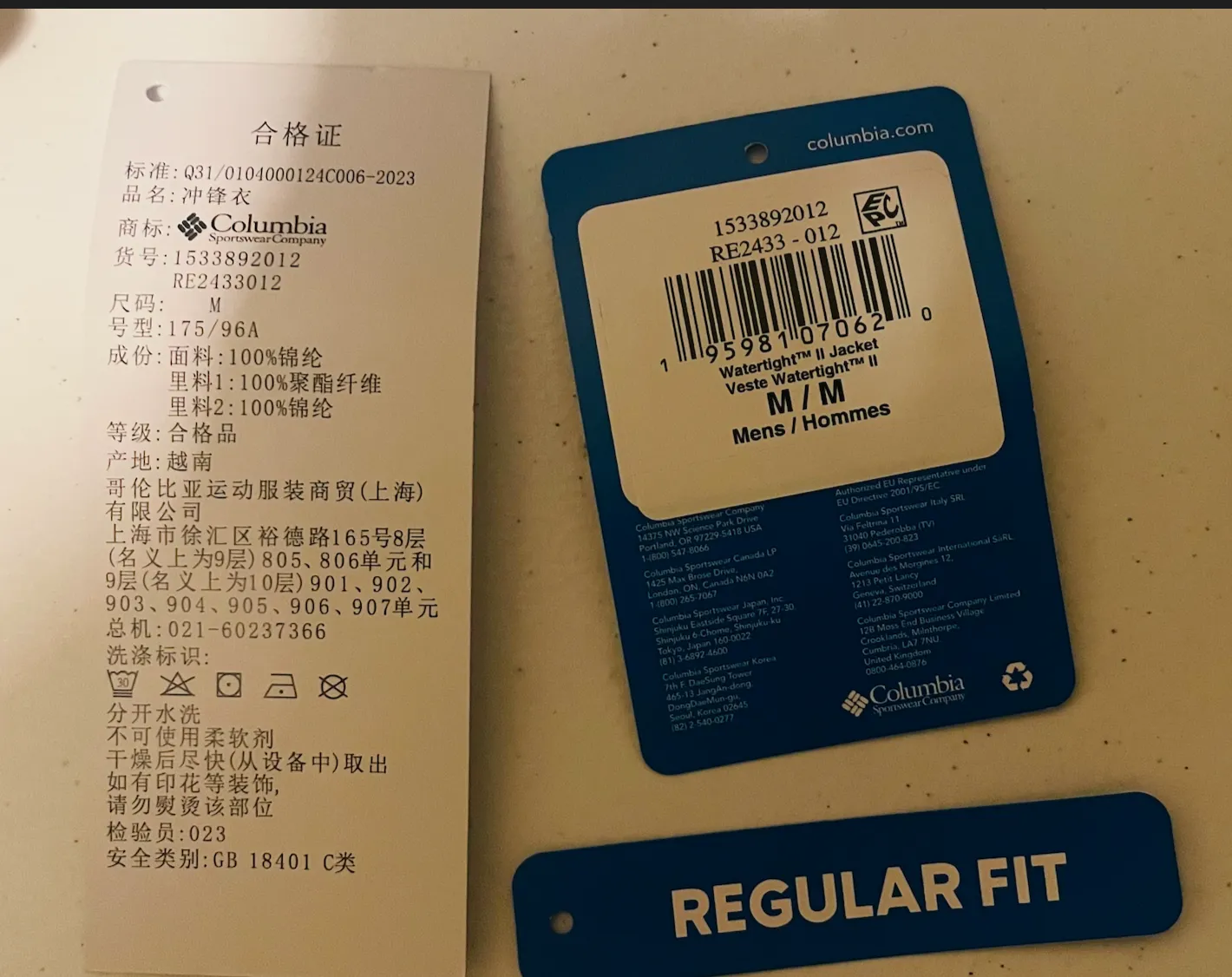
This jacket retails under 1533892 - 012, where the first is the model and the second the color in CN, but under 1533891 in EU/NA.
Case Study 2: Uniqlo/MUJI
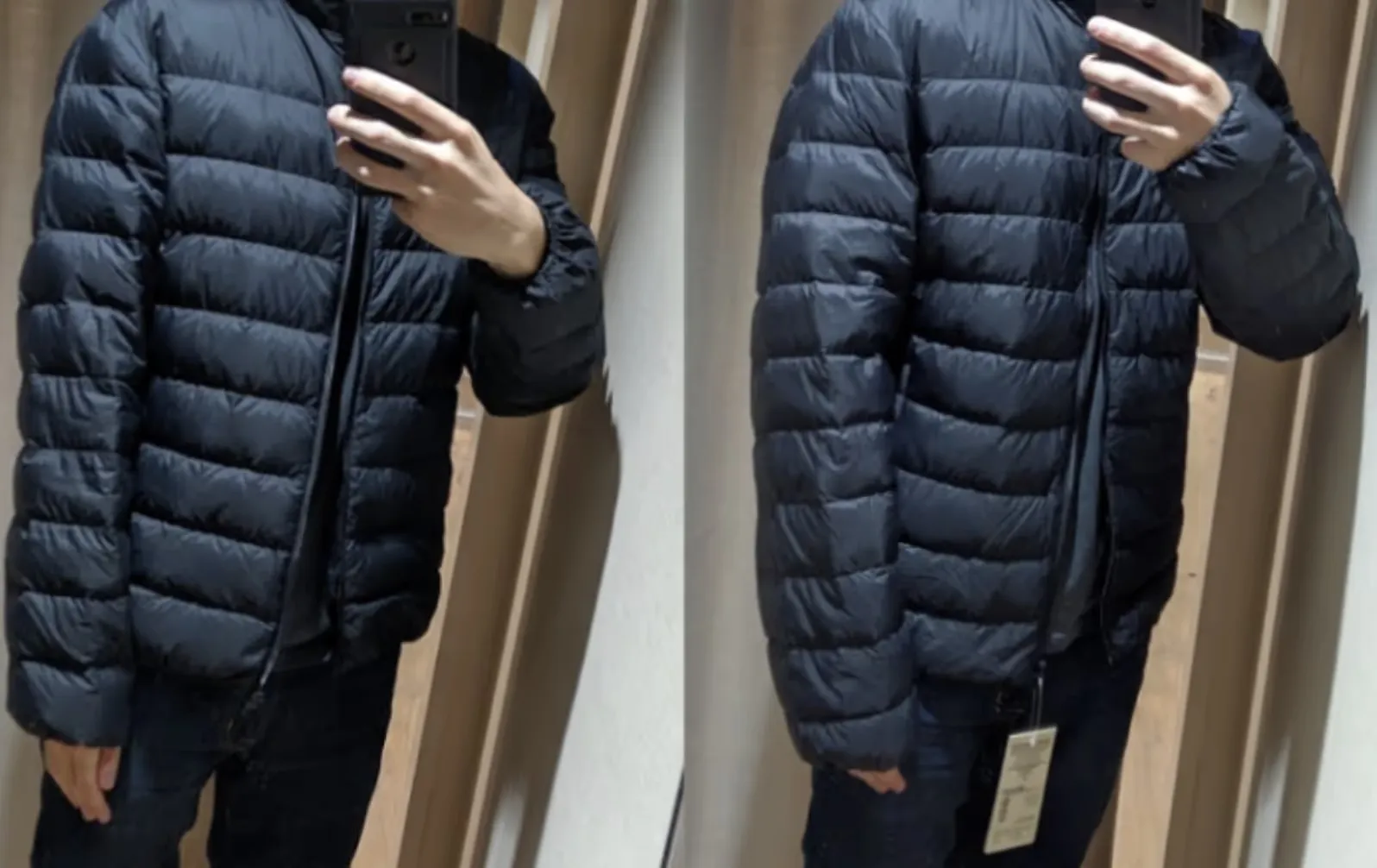
The image below compares an MUJI PRC jacket to a US sized one. Note the length of the sleeve and number of segments in the torso.
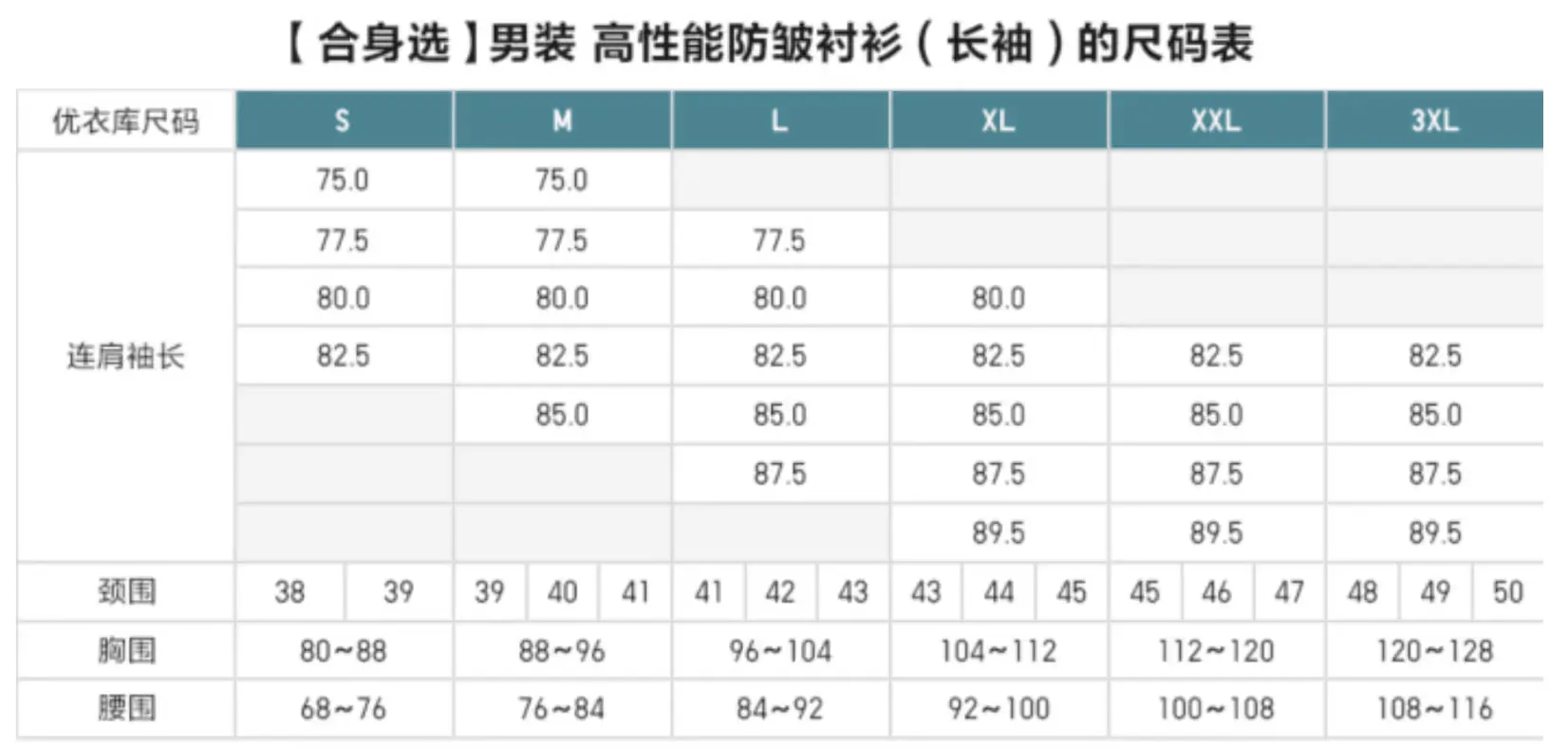
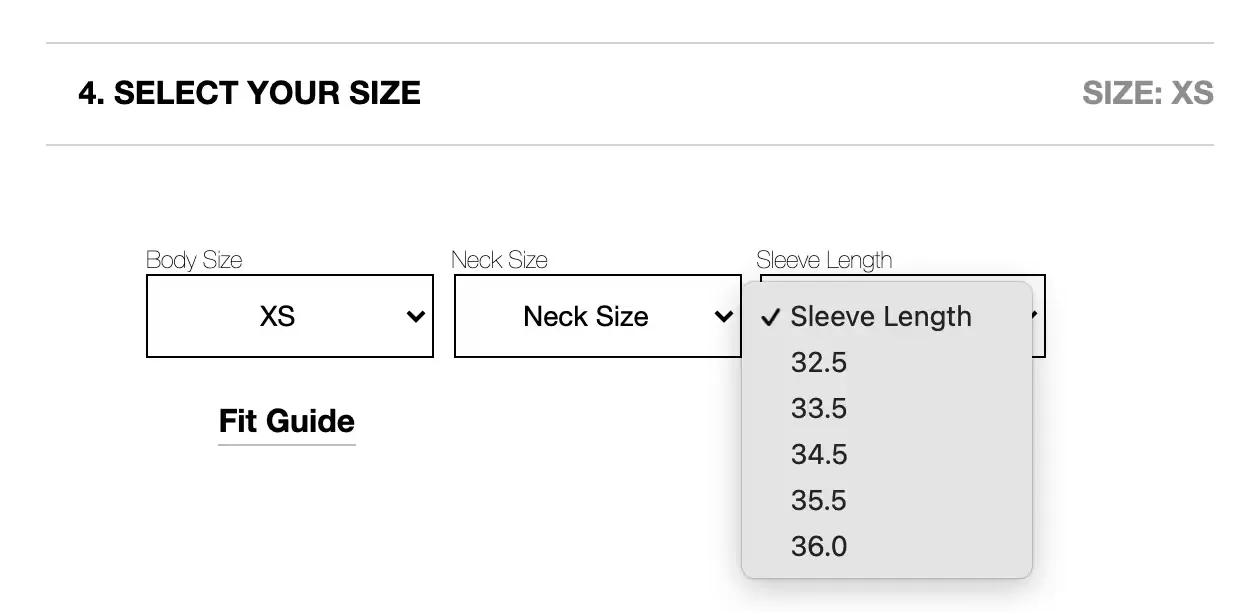
This chart shows UNIQLO’s tailored dress shirt options: note how even XS only goes down to 32’’ in the States while the lowest on the chart is 29.5’’ (75cm) for the same chest width. If you look at the shortest/longest sizes for each place, the difference is approximately three inches for both bounds.
Areas of non-importance
Clothing that are areas of non-importance include gloves, shoes, socks, underwear, belts, scarves, and hats. I have always found fitting clothing in these segments.
Further Notes
Brands that I see as having both an “Eastern” and a “Western” size:
- Uniqlo
- MUJI
- Montbell
- Columbia
I found Patagonia in Taiwan to only have Western fits.
Anecdotally, I find Nike shoes to be too narrow while ASICS are OK. Northern Chinese (cannot speak for other regions, only myself) seem to have wider feet than other races. ANTA shoes may fit better for this reason.
Unresolved questions:
- How many types of clothing forms exist across clothing retailers and other regions?
In a future article, I will describe how to procure these clothing items and some interesting material goods.